
This is a response to a previous opinion written by Aamir Evans ’26.
By Traveler Stanberry ’26
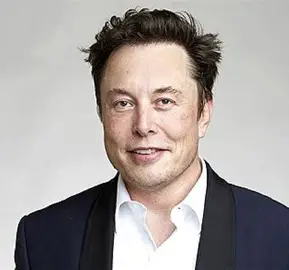
To assume that because other people are struggling it becomes the responsibility of others to participate in funding their well-being is the crux of the question. Everyone would like to help others, but the cold reality is that no individual gets to tell Elon Musk, or billionaires, what to do with their money. This is still true even if it might help greater society. Billionaires are not inherently unethical because ethics are subjective, and ethical views cannot be imposed on individuals for choosing not to provide for others.
Let’s say Elon tried to end world hunger, a cause that everyone can mutually agree has a set end goal and is good for society as a whole. According to the UN, it would cost roughly $40 billion a year until 2030 to cure world hunger. Now, Elon can surely afford this if he were to sell $160 billion of his Tesla stock. However, his money doesn’t guarantee anything: supply shortages, mismanagement, shipping, wars—other things get in the way of ending world hunger besides money. In other words, it’s not a one-time fix, and everything has a cost. For Elon, it would cost him ownership in his businesses—things that he has worked his entire life creating.
In numerous ways, Musk already contributes to society vastly. He employs over 140,000 people in the U.S. for Tesla alone; he co-founded PayPal, which has 436 million active accounts as of Q1 2025; and he founded SpaceX, the first company to create technology that can catch rocket boosters, which I would argue is one of the greatest human achievements of the century. Attempting to end world hunger would cause damage to his legacy and his life’s work, with no guarantee that what he sacrificed would create value for other people.
Back to the argument: ethical values are typically seen as subjective, meaning something unethical to most people is not necessarily unethical to everyone. With this in mind, do we have the right to judge the richest man on the planet based on the ethics of how he spends his own money? And do other people have the moral and ethical obligation to provide for others? There are exceptions to this specific claim—family, close friends, children, etc.—but in general, if you believe that, then you probably think that Elon Musk is unethical for not spending more of his money on charity. My perspective is that just because someone could do something that would help everyone, it does not mean that they are obliged to, or that they are unethical if they do not. Being a billionaire, therefore, does not strengthen a moral obligation to provide for others, nor does refusing to provide for others make billionaires unethical.
Note: Please feel free to send us your opinions to be featured on The Voice.
Disclaimer: The Voice is the student publication of The St. Paul’s Schools. The opinions expressed in articles, editorials, and other content represent the views of the individual student authors and do not necessarily reflect the opinions or official policies of The St. Paul’s Schools, its faculty, staff, or administration. All content is reviewed for appropriateness in accordance with school standards, but student journalists retain responsibility for their own reporting, analysis, and commentary.




Leave a Reply