By: Carter Holland ’28

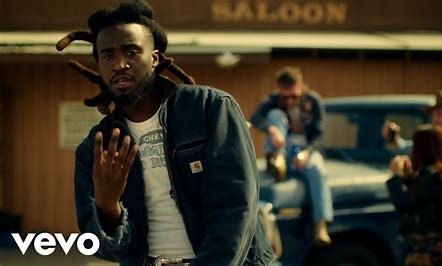
It feels like every time I turn on the radio and hear a new song, it seems like the artist barely puts any effort into creating it. And honestly, there’s a reasonable explanation for this. In 2024, from the week of July 13th to the end of November, the song that dominated the number one spot on the Billboard Top 100 was “A Bar Song (Tipsy)” by Shaboozy. This track is based on the song “Tipsy,” originally released in January 2004 by J-Kwon, which peaked at number two on the Billboard Top 100. When I say “A Bar Song” is based on “Tipsy,” I don’t mean it’s inspired by it—I mean it’s practically an exact copy, with the only difference being that it’s now a country song. Shaboozy simply slapped on a new title, added a slight twist, and somehow turned it into a number-one hit with minimal effort to make it unique.

While this is one of the most recent examples of a sampled song topping the charts, it’s far from the first.

In the 1990s, Vanilla Ice released his hit song “Ice Ice Baby.” The issue? He sampled it—using part of another song in a new one—from “Under Pressure” by Queen. Typically, sampling requires consent from the original artist, but Vanilla Ice didn’t have permission. Despite this, “Ice Ice Baby” made him millions and remains a popular track, even though half of it is lifted from Queen’s work. Fast forward to today, and it feels like more artists are following Vanilla Ice’s lead. Songs like “First Class,” “Betty,” and “Pink Pony Club” are just modern examples of this trend, sampling tracks like “Glamorous,” “Never Gonna Give You Up,” and “All Star,” respectively.

But it’s not just the recycled beats that make today’s music feel so unoriginal. In the past, artists would play their own instruments and sing with their real voices. Now, it’s all autotune and digitally produced sounds. Some might argue that there’s a finite number of beats and melodies that artists can create—and that’s a fair point. However, even with these limitations, musicians still have the ability to craft unique sounds and fresh ideas. The problem is that many don’t bother. It’s frustrating to turn on the radio and hear the same formulaic approach in nearly every song.

Discover more from The Voice – brought to you by The Page & Epistle

Subscribe to get the latest posts sent to your email.

One response to “Why Does Popular Music Today Feel… So Unoriginal?”

  1. Reading this article reminded me of another article I came across a while ago, written by a Harvard linguist, regarding the way trends cycle on social media (the link is attached the bottom of this comment). To summarize it very briefly: things that become popular quickly remain popular for long periods of time, and social media actively encourages content creators to hop on the bandwagon to remain relevant until the trend eventually dies out.

    Since humans tend to stick to what we are more familiar with, it’s no wonder that reusing certain themes from other music can elicit such a positive response. With the rise of short-form content, musicians are forced to make the “best” parts of their songs only a few seconds in length so that they can rise quickly in popularity (and therefore make more money, which is basically what drives everything in society these days). Thus, after a while, they tend to recycle the same things in an attempt to remain relevant.

    Compare this to composers during the 1700s, who were being paid to create music for entire church services, parties, and the like. The focus was not on capturing the short attention spans of modern-day media consumers, but on entertaining their sponsors for long periods of time. Thus, to be repetitive would be the end of their career.

    I’m not saying that modern-day artists are any less creative, but I am blaming the system for the way it forces artists to conform to these confining standards. Part of the solution to this would be actively supporting artists that challenge the norm, rather than letting the algorithm smother them into obscurity… but I digress.
     
    P.S. Here is the link I mentioned: https://etymology.substack.com/p/the-engagement-treadmill-how-algorithms?utm_source=post-email-title&publication_id=2213089&post_id=150810381&utm_campaign=email-post-title&isFreemail=true&r=43761f&triedRedirect=true

Leave a Reply

Trending

Discover more from The Voice - brought to you by The Page & Epistle

Subscribe now to keep reading and get access to the full archive.

Continue reading

Discover more from The Voice - brought to you by The Page & Epistle

Subscribe now to keep reading and get access to the full archive.

Continue reading