
By Erik Xu ’28
The rise of the hip-hop genre became especially significant in the 1960s and 70s, as the civil rights and Black power movements made it impossible for the world to ignore the unconscious struggles of Black Americans. Music served as a powerful way to navigate these struggles, with songs like “The Revolution Will Not Be Televised” by Gil Scott-Heron, written in 1970, emphasizing the need to actively participate in change rather than passively waiting for it to happen.
In the 1980s, Ronald Reagan’s presidency led to increased poverty among inner-city Black Americans. During this period, hip-hop’s popularity continued to grow, and artists began addressing these societal issues. Thus, conscious rap was born.
One of the earliest successful conscious rap songs was “The Message” by Grandmaster Flash and the Furious Five, released in 1982. The track highlighted the poverty in inner-city ghettos during Reagan’s presidency and brought social activism to the forefront. It earned a place in Rolling Stone‘s 500 Greatest Songs of All Time, inspired the title of a Nas track in 1996, and was sampled by Ice Cube in “Check Yo Self” in 1997.
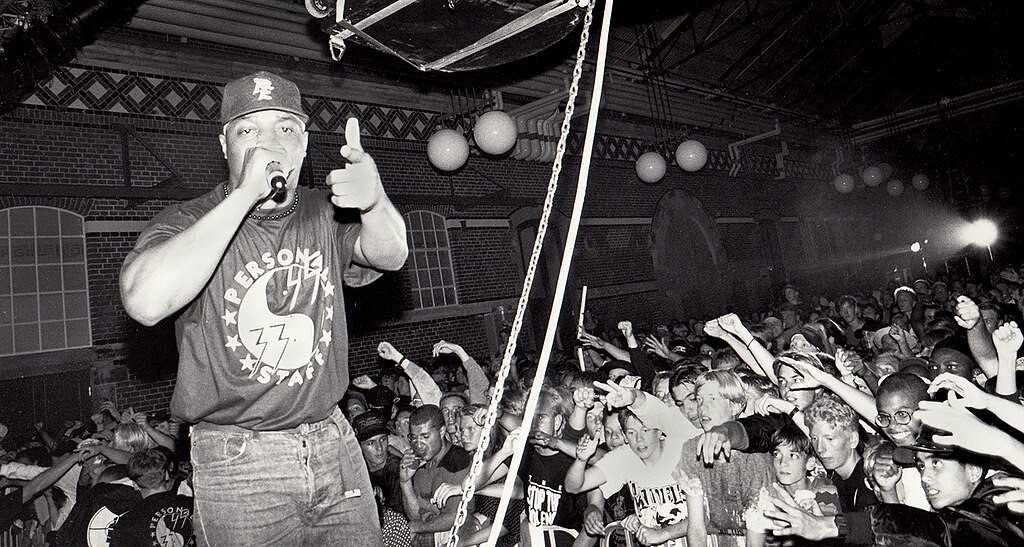
Public Enemy released It Takes a Nation of Millions to Hold Us Back in 1988, featuring lyrics that exposed racism in America and encouraged rebellion against discrimination and economic inequality. In 1990, they followed with Fear of a Black Planet, exploring themes of organization and the power of the African-American community.

The 1990s marked a formative decade for hip-hop, with artists like A Tribe Called Quest, Mos Def, 2Pac, Arrested Development, Nas, Ms. Lauryn Hill, and The Roots rising to prominence. These artists combined Afrocentric themes with political messages, shaping the genre’s identity.
2Pac’s “Keep Ya Head Up”, released in 1993, became an anthem for female empowerment, addressing violence and hatred towards women. His posthumous compilation album, Greatest Hits (1998), included “Changes”, a song tackling issues like racism, drugs, police brutality, and gang violence.
A Tribe Called Quest’s critically acclaimed album The Low End Theory (1991) delves into topics such as relationship issues, consumerism, and the hip-hop industry itself. The album’s title carries multiple interpretations, possibly referring to the bass frequencies in its tracks and the societal position of African-Americans.

In 2016, A Tribe Called Quest released We Got It from Here… Thank You 4 Your Service, their first album in 18 years and their final project together. Recorded in secrecy, the album features contributions from André 3000, Kanye West, Kendrick Lamar, and Busta Rhymes. Tracks like “We the People…” confront societal issues head-on. The album’s sound is distinct from their usual jazzy style, incorporating a drum break from Black Sabbath’s “Behind the Wall of Sleep” (1970) for a more hardcore feel.
The Roots, now widely recognized as the house band for The Tonight Show Starring Jimmy Fallon, are pioneers of the conscious rap subgenre. Their 1999 breakthrough album, Things Fall Apart, reflects on discrimination and violence. Its cover features a 1960s photograph of two Black Americans fleeing police in Brooklyn’s Bedford-Stuyvesant neighborhood.
The Roots also innovated by blending jazz with traditional rap beats, influencing generations of artists with their complex musicality. Kendrick Lamar paid homage to The Roots in his 2024 music video for “Squabble Up”, which features a set resembling the spacious yellow room from The Roots’ “The Next Movement” video.

Conscious rap has left a lasting legacy, shedding light on overlooked struggles and encouraging listeners to draw their own conclusions. It has influenced today’s rappers like Kendrick Lamar, JID, and J. Cole, who excel in the subgenre.
- O’Connor, Ashley. “The Evolution of Conscious Hip-Hop.” CNS Maryland, cnsmaryland.org/interactives/fall-2018/rap-politics/index.html . Accessed 15 Jan. 2025.
- Quan, Jay. “The Rise of Socially Conscious Hip-Hop Music.” Rock the Bells, 9 July 2024, rockthebells.com/articles/rise-socially-conscious-hip-hop/ . Accessed 15 Jan. 2025.
- Soto-Rocha, Yadiel. “What Is ‘Conscious Rap’ and Why You Should Be Listening.” The University Daily Kansan, 4 Dec. 2024, www.kansan.com/opinion/what-is-conscious-rap-and-why-you-should-be-listening/article_24ac2064-b27f-11ef-97f2-0bbd17a1c6f2.html . Accessed 16 Jan. 2025.




Leave a Reply