
By: So Shiroma
In Japan, New Year’s is one of the most popular events. Many people enjoy this time because there is often no school or work, allowing everyone to take a break and spend time with family, relatives, or close friends. We participate in special activities and enjoy foods that are unique to the New Year. It’s a time for relaxation and creating meaningful memories with loved ones.
“Osechi”
“Osechi” are traditional foods which are eaten by a lot of Japanese on New Year’s Day. It includes many kinds of Japanese traditional foods, and they are packed together in “Jubako”, which is a special box that resembles bento boxes.
These are the main items typically included in Osechi.
 Kuromame 黒豆(黒豆)
“Kuromame“ is sweet black soybeans.
Symbolizes health and diligence. Eating Kuromame is believed to bring hard work and good health for the new year.
 Kazunoko 数の子(かずのこ)
“Kazunoko” is herring roe.
It represents prosperity and fertility. The numerous eggs signify wishes for a large and thriving family.
 Tazukuri 田作り(たづくり)
“Tazukuri” is candied sardines.
Symbolizes a bountiful harvest. Sardines were traditionally used as fertilizer, linking them to agricultural success.
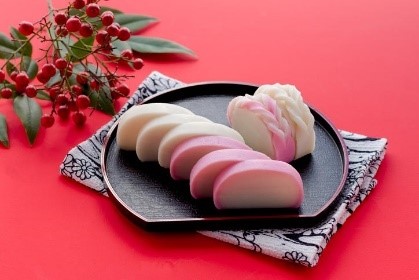
 Ko-Haku Kamaboko 紅白かまぼこ(こうはくかまぼこ)
“Kamaboko” is a fish paste (fish cake).
“Kamaboko” is half-moon shaped and represents sunrise. “Ko-Haku Kamaboko” has two colors, red and white. Red means “joy” and protection from evil spirits, and white means “holy” and purity. Together, they signify celebration and fortune.
 Datemaki 伊達巻(だてまき)
“Datemaki” is sweet, rolled omelet. This is my favorite.
Represents knowledge and learning. Its scroll-like shape is associated with scholar achievements. If we eat “Datemaki” on New Year’s Day, we can supposedly get a lot of knowledge about something.
 “Hanetsuki” 羽根つき(はねつき)
A Traditional Japanese New Year Activity
Hanetsuki is a traditional Japanese game played during the New Year. It is similar to badminton but without a net. Players use wooden paddles called “Hagoita” to hit a shuttle cock, aiming to keep it in the air for as long as possible.
This activity is often seen to ward off evil spirits and pray for good health in the coming year. Traditionally, if a player fails to hit the shuttlecock, their face may be marked with ink, adding a playful element to the game. Decorative Hagoita are also popular as gifts or decorations, symbolizing good luck and happiness.
When a player fails to hit the shuttlecock and it falls to the ground, they face a playful punishment. Their face is marked with ink, usually as a lighthearted way to add fun and humor to the game. This tradition adds a festive and enjoyable atmosphere to the New Year celebration.
My New Year
In addition to the customs mentioned above, there are many other activities during the Japanese New Year.
People decorate their homes with items like Kadomatsu (traditional bamboo and pine arrangements) and visit shrines for Hatsumode (the first shrine visit of the year). They eat Mochi (rice cakes), exchange Nengajo (New Year’s greeting post cards), and children get Otoshidama (money gifts in envelopes).
Despite all the activities, the Japanese New Year is a unique time when we can enjoy peaceful moments with family. This calm and special time is something I truly love.




Leave a Reply