
By Marta Karpovich ’25
My guiltiest pleasure, wielding such power over me that I am kept awake at night by my mortified conscience, is talk-show re-runs. My (quite thrilling) Saturday nights are often spent scouring YouTube for various clips dating back to the 80s, gaping at grainy outlines of Graham Norton and Jimmy Fallon with hellacious fervor. And, truth be told, I often laugh a little too hard at the low-hanging fruit that is their humor. However, as only joyless souls can claim that they do not worship The View (and can name all its constituents from memory), I adamantly refuse to apologize.
This obsessive practice began in fifth grade, when my passion for all things Meryl Streep reached unprecedented heights. As a twelve-year-old girl, I spent hours watching precious Streep appearances from the early three-network days to COVID-era Zoom calls streamed from my idol’s very own living room. As you can imagine, each one was viewed from the medium for which they were originally intended: my sister’s fourth-generation iPad with the floral Vera Bradley case.
Beyond my infatuation with the actress herself, I found talk-shows to be a great source of comfort in the throes of my hectic 6th grade life. A seed was planted that soon germinated into an unhealthy fixation. Obsessing over Meryl Streep’s interviews turned into watching arbitrary appearances of celebrities I had never even heard of on the Today Show, then searching with razor-sharp determination for the best of the best Ellen episodes featuring other celebrities whom I had grown fond of. From there, I began listening to the podcasts of Conan O’Brien (who is 100% Irish, by the way), Jimmy Kimmel (whose daughter once pooped on Jennifer Aniston’s lawn), and Stephen Colbert (but only when he has Larry David on). From Drew Barrymore to Jay Lipton on Inside the Actor’s Studio, I have seen them all.
While it is true that I may simply have a little too much time on my hands, I have also found that there is much to learn from this indulgence. Something about the grainy faces of Barbara Walters and Oprah Winfrey serves as a jarring reminder of the transitory reality of the present, which will soon be viewed as just another clip in the historical continuum.
I believe the evolution of our society itself, both behaviorally and technologically, is most starkly apparent in the chronological viewing of Jay Leno interviews from the ‘90s to Chelsea Handler shows in the 2010s. My personal quest for historical changes and continuities through low-quality YouTube videos has deepened my understanding of the social norms that have ebbed and flowed over the past few decades.
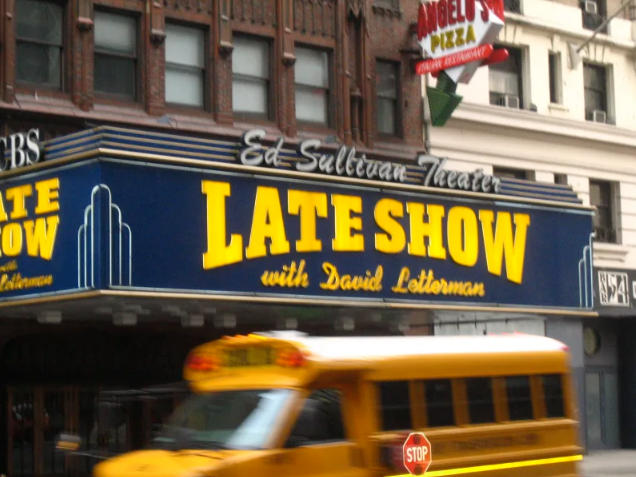
A prime example: the 90s. What a horrible time for women! The manner in which male hosts treated their female guests is, in the hindsight of 2024, quite shocking. My YouTube queue often cycles through various videos of David Letterman soliloquizing about his female guest’s legs, followed by his infamous 1998 interview with Jennifer Aniston in which he decided to lick her hair, without consent, on national television.
Another common culprit is Jay Leno, who I’ve observed (from my iPad) calling his female guests “pigs” after watching them eat a grape from their dressing-room gift basket. Rarely can one find an interview aired before 2000 in which the male host did not ever-so-indiscreetly hit on his interviewee. And there was virtually nothing she could do except sit there and smile.
Each video of this sort is solid evidence of the brazen disrespect for, and sexualization of, women at the time. In comparison to the #MeToo movement in 2017 and its subsequent influence on male-female dynamics, such acts broadcast on national television would warrant immediate “cancelling” in today’s culture.
While the 2000s are just as shocking, they seem to focus less on female sex appeal and are more so fascinated with the latest diets and exercise regimes of the era. Female hosts such as Rachel Ray or members of The View seemed to have spent most of their airtime discussing the female guest’s caloric intake and the thinness of her physique. “Do you eat?”, “How do you stay so thin?”, and “Have you lost weight?” are just three out of a score of comments, uttered in almost every interview, directed at an actress’s body composition. Once again, these televised conversations would not slide today (Thank God!). Although our society is far from perfect, I think we have commonly agreed that asking an actress to share their diet, down to every grain of rice, is inappropriate.
Technologically, listening to an oddly large number of actresses discuss their fax-machine break-ups and the occasional ringing blackberry in an actor’s pocket are surreal experiences in 2024. It comes as a shock to realize that these scheduled, on-air appearances were the public’s only glimpse into the lives of their beloved celebrities. Before Instagram, no one knew that Selena Gomez was eating a croissant in a Parisian café, nor did they have any clue what Julia Roberts’s house looked like. Celebrities came out of hiding, walked onto the Warner Brothers lot, danced for Ellen, and left. Inevitably met by a gaggle of paparazzi blinding them with cameras to ensure that the most unflattering shot imaginable was taken, they returned home without the burdensome expectation to update their Instagram story before they went to bed — most likely with Conan O’Brien’s hyena-like laughter lulling them to sleep.
The mere medium in which film itself is distributed has slowly but surely evolved from “Coming to a theater near you” to “Go watch it on Netflix.” Then, it was much harder to sign up for an illegal Australian streaming site that will ultimately give your laptop a virus in exchange for a highly pixelated version of the latest Blake Lively movie. You actually had to buy a ticket.
While commonplace in 2024, the simple pleasures of our contemporary life are fantastical science-fiction to the blurry faces on “The Today Show” in 1992. What we see today is an improved continuation of what has come before, and a precursor of what is to come. As society is changing at a rapid rate, everything we know is victim to impermanence. Unless, in 40 years, we are still able to watch YouTube clips of Adam Sandler in his basketball shorts and baseball cap on a 2024 Jimmy Fallon special.
Therefore, thanks to Diane Sawyer and Whoopi Goldberg, my YouTube feed serves as my personal time capsule of American society, tracking the changes we have made in 15-minute videos. While I could not tell you who Mr. Beast is, I can assure you that his videos are no comparison to the childish joy and stellar education that the words “You Get a Car!” provide.




Leave a Reply