
By Kenroy Hensley ’24

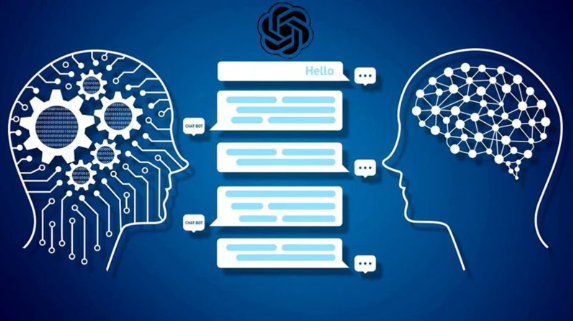
ChatGPT has emerged as the new global artificial intelligence that allows its users to generate anything they want, from mathematical equations to stories. It can even have a generic and mundane sense of humor.
This chatbot was developed and launched by OpenAI (an artificial intelligence research laboratory) on November 30th, 2022. The company was co-founded by Elon Musk, Sam Altman, and Peter Thiel, among others. Less than a week after its launch, the chatbot had gained one million users, due to Musk’s promotion of it on Twitter. It’s no surprise that people are eager to try out this new creation given to them by the evolutionary process of artificial intelligence in this advanced age.
Now one question is how schools will guard against the use of ChatGPT to cheat. The AI is free and available to everyone who has an email, so stopping school students from exploiting it to write an essay or explain a complex problem may be difficult.
According to Matt O’ Brien in his article “What is ChatGPT and Why are Schools Blocking It?,” “the New York City education department said…that it’s restricting access (to the chatbot) on school networks and devices because it’s worried about its negative impacts on student learning.” Teachers, especially those in the English department, are worried that ChatGPT could be detrimental in the development of certain critical thinking skills that students need to craft essays as well as simply “thinking outside the box.” These skills will decline over time if students rely on ChatGPT, since all they need to do is go to the AI and have it do the thinking for them.
However, in a more positive light, only a small portion of math teachers would be wary of ChatGPT if they force their students to show their work and explain how they solved a mathematical problem. Solutions to math problems are taught differently depending on the class, as teachers have firsthand knowledge of how their students will most likely respond. This also ties into the fact that different teachers prefer different types of answers, which is common in math departments. In English classes, many students understand that it wouldn’t be wise to use ChatGPT to write their essays, because as it becomes more popular, schools are trying to come up with ways to detect it.
According to Avinash Saravanan in her article “The Limitations of Chat-GPT on the Medium,” the AI is unable to access internet and location-based information. The chatbot is also limited to information that doesn’t expand past the year of 2021, as stated on the OpenAI website, rendering it unable to provide commentary on recent news. It also lacks authentic humor, since the chatbot is fundamentally logical and has little creativity, a key disparity in comparison to humans. One of the consequences of its generic output is attempting to generate unique content without committing plagiarism. The length of its input and output is another drawback. For example, the word/character limit for ChatGPT input/output is 3000 words. with multiple combined outputs, a user wouldn’t get anywhere close to a novel’s worth of text with the bot. AI still has a long way to go to overcome these various limitations.
English professors at Northern Michigan University are now requiring their students to submit a first draft and final draft for their essays, according to an article from Forbes on ChatGPT in Schools: Here’s Where It’s Banned—And How it Could Potentially Help Students. When turning in a final draft, students must explain any changes that they’ve made. In some schools, teachers are relying on Turnitin, an online software that detects plagiarism, to help catch plagiarism in students’ work that could indicate use of ChatGPT.
Some experts, according to Forbes, believe the advanced AI is overrated in terms of its downsides, and that it should be mainly used by students who have learning disabilities. The AI can simplify text for students who are at a lower reading level and help ESOL students study. Evidently, ChatGPT can be beneficial to one’s education when used properly.
In conclusion, considering the thoughts of teachers and experts in artificial intelligence, there isn’t a single way to view ChatGPT. According to Megan Cerullo, a business reporter for CBS News on Money Watch, the AI is only going to become more popular. A major question is whether ChatGPT should be banned because its cons outweigh its pros, or whether teachers should trust students to find ways to utilize it to enhance their learning.


Leave a Reply