
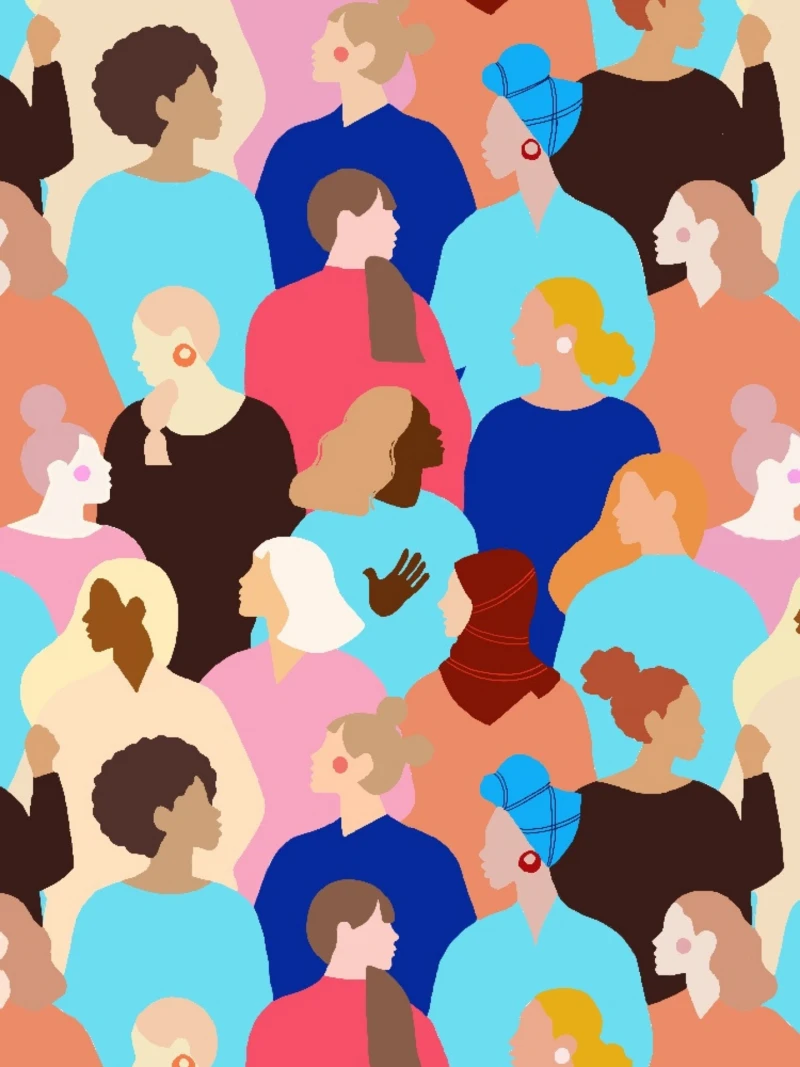
Most people are expected to follow the norm. Because humans are social creatures by nature, we adapt to what most people around us do and believe. Our slang, music, food, clothes, and how we carry ourselves are affected by the people we are around. Thus, stereotypes are born.
If you have a certain amount of money, you are associated with a particular group. If you walk a certain way, talk a certain way, and even look a certain way, you are categorized. This tendency to categorize people in separate groups because of our “first impression” of them causes us to focus on one characteristic about that person and ignore others that make that person unique.
Color Association as a Predictor of Gender
Imagine Ryan, a boy who is attending his first day at middle school. During art class, the teacher tells the students to draw a knight, but only using one color to do so. When Ryan chooses pink because that is his favorite color, he is questioned by some students as to why his favorite color is pink instead of a “boyish” color like green or brown. Ryan replies, “I don’t know, I just like pink better.” When his classmates asked the question, they’d associated color with gender, though color is no indication of gender.
An investigation by Claudia Hammond depicted differences in women’s treatment of babies. When given “the exact same babies,” women treated them differently, “depending on whether they were dressed in pink or blue. If the clothes were blue, they assumed it was a boy, played more physical games with them…whereas they would gently soothe the baby dressed in pink.”
The reason we associate color with gender might not just be a social one, but a psychological one. Many Americans want to know the gender of their baby before they’re born, and once they do, they buy things for the baby in colors that we associate as “boyish” or “girlish.” This cycle continues with the generation after, causing a social bias about what we think is “boyish” or “girlish.”
Once we realize that color doesn’t have any correlation with gender, we can eliminate the harmful effect of stereotypes, such as people forcing themselves to like certain colors to make themselves appear more masculine or feminine.
Name and Gender Discrimination in the Workplace
In a recent study, the National Bureau of Economic Studies found that stereotypically Black-sounding names reduced the probability of employment by 2.1 percent compared to white-sounding names. Some of these gaps were worse depending on the company. For example, this study found that in firms with the most racial discrimination, half of the Black applicants with stereotypical Black-sounding names didn’t receive a call for employment from the firm during the experiment. Likewise, when it came to gender, depending on whether the firm favors male or female applicants, there was a 2.7 percent difference in the probability of employment.
A Canadian research report found that applicants with Asian-sounding names and foreign educations were 29.7 percent less likely to get employed on first calls compared to applicants with Anglicized names. If the Asian applicant had a mix of Canadian and foreign experience, then they were 46.1 percent less likely. If the Asian applicant only had foreign experience, then they were 62.5 percent less likely.
Thus, you could have the same qualifications, or better, as someone else but have a lower chance of being offered a job because of your name. For example, a man named Bill would most likely have a better chance of employment than a man named Jamal. This bias not only causes emotional damage to the applicant; it can have a long-term negative effect on a company’s productivity and success. Companies most susceptible to gender and racial bias won’t improve since an applicant’s potential is overridden by the perception of their name.
Color association with gender and name discrimination have affected many cultures for far too long. Knowing that these biases will limit the diversity of cultures which strive for improvement and growth in their communities, it is best that we tackle this bias sooner rather than later. Success will help our workplace culture and businesses thrive.




Leave a Reply