
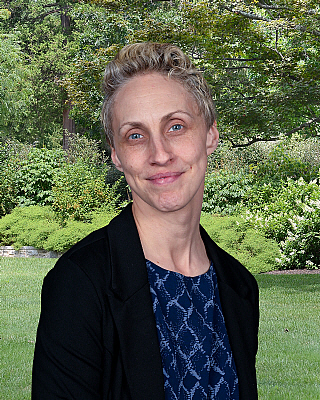
By Torben Heinbockel ’26
As part of The Voice’s new faculty spotlight series, we spoke with Dr. Katherine Arner, the newest member of the Upper School history department. In her responses, Dr. Arner shared with us what led her to St. Paul’s School, which historical topics she believes are most important for students to study, and what she hopes students gain from her classes.
What drew you to St. Paul’s and to teaching history here?
“I was drawn to St. Paul’s because of the sense of community and values. It’s something I’d already gotten to know and love as a faculty member’s spouse. I was excited to experience a community that values experiences like Kinsolving, organized sports, and global travel. That’s a growth area for me as a teacher, and I’ve been learning a lot. While I’m also excited to be teaching history, I think those have all been the biggest draws for me.”
What is one historical event or idea you think every student should study, and why?
“The one that most immediately comes to my mind is the Holocaust. There are SO many lessons we can learn from that event about, well, humanity. How does hate escalate into state-sanctioned genocide? How do you recognize it? What does it mean to dehumanize or to lose one’s humanity? What does complicity look like? What does it mean to be a bystander? What power do you have to be an upstander? What does resistance look like? What about justice?”
How do you help students connect the past to current events or issues that matter to them?
“There are a few go-to’s for me. The first is just teaching critical reading and thinking. I think those skills go such a long way in helping us navigate news, particularly in the era of social media, AI and fake news. That larger goal is there whenever I’m challenging students to actively annotate, think about what they read, and ground their claims in evidence. It’s there when we pause and devote class-time to exploring competing views of news events with allsides.com.
I also just try to get to know my students. I’ll use that knowledge to nudge them towards particular ideas for research topics, current issues I think they’d feel passionate about. And sometimes I’ll use that knowledge to bring in something I know will help them connect to an otherwise seemingly distant event.”
What do you hope students take away from your class beyond historical facts?
“Four things: Empathy, critical thinking, the power of evidence and precision, and learning as something collective.”
If you could invite one historical figure to speak to your students, who would it be and what would you want them to discuss?
“Elie Wiesel. I think I’d want him to discuss what the Holocaust, living through it as a teenager, surviving it, and going on to think and teach about it over the decades, taught him about what it means to be human. You can read any of his work to get a snapshot of his thinking. Imagine, though, a rich back-and-forth with teenagers wrestling with that now.”
Closing reflection
Dr. Arner’s responses illustrate that in her classroom, learning history is not simply a matter of memorizing what occurred. Rather, it is about developing the ability to read with care, argue with evidence, and comprehend human behavior in both its finest and worst manifestations. The emphasis on empathy, precision, and collaborative learning creates a tone that seems especially relevant today, and The Voice is looking forward to seeing the impact that Dr. Arner will have on students across the Upper School.
Interview conducted by The Voice student journalism team



Leave a Reply